
Distance decides the connection
T&TEC's published service standards sort new connections by how much work their side needs. Roughly:
| Connection | T&TEC's published timeline |
|---|---|
| Simple: within 30 m of existing lines | Survey within 3 working days of application; connection within 3 working days of payment and receipt of the inspection certificate |
| Complex: up to 100 m | Estimate within 5 working days of survey; works within 15 working days |
| Complex: over 100 m | Estimate within 7 working days; works within up to 30 working days |
Those are T&TEC's targets, from their brochure, not a promise from us. What it tells you: a house far from the road may need poles and line work, which takes longer and costs more, so find out early.
The order that avoids waiting
- Ask T&TEC early. They advise applying well before you need supply and checking with them on the best position for the point of supply.
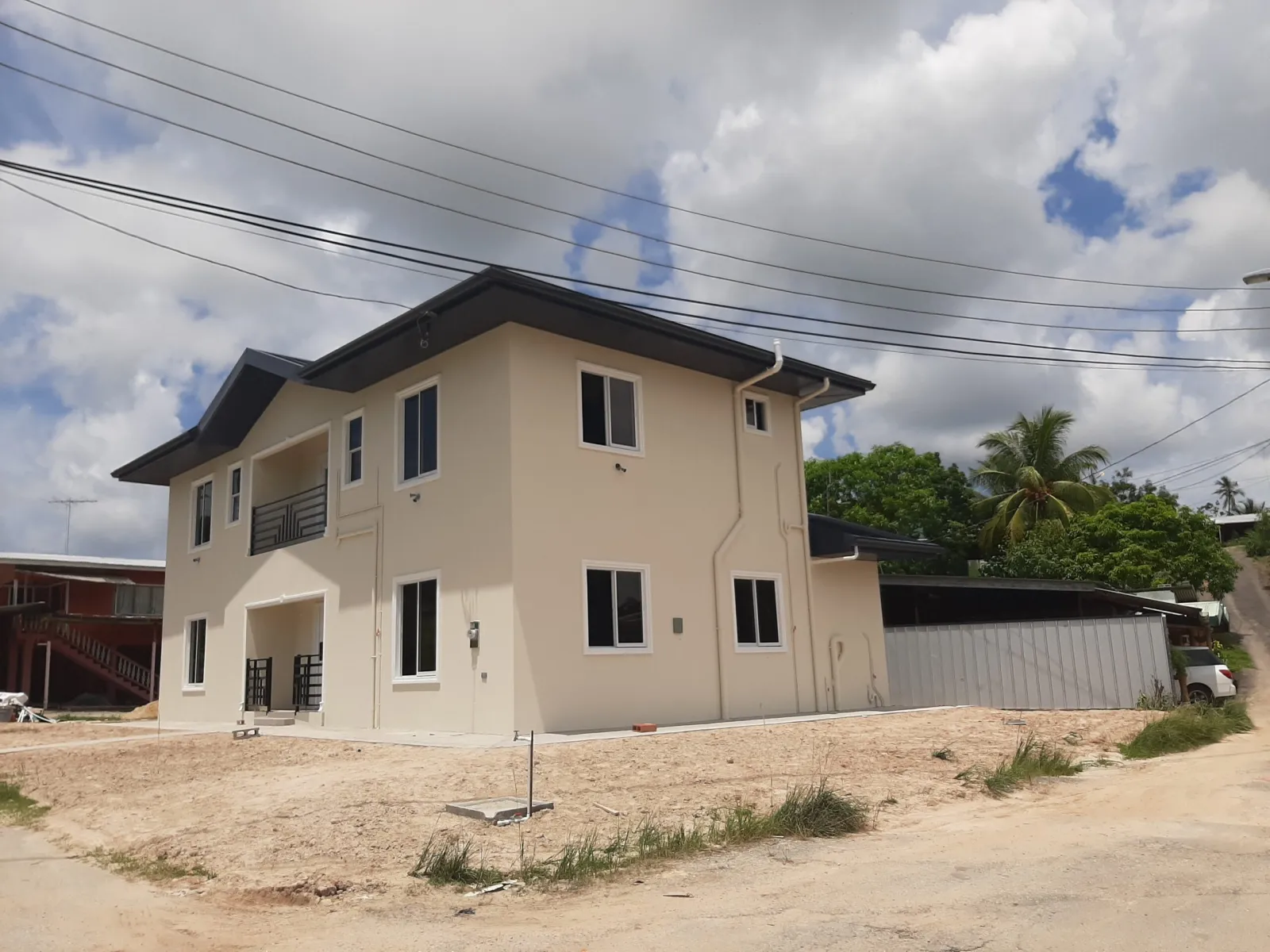
- Put the meter where the line can reach it. Agree the meter and point of supply position on the site plan, before the walls go up.
- Temporary supply for the build. If you want power on site during construction, that temporary installation needs its own inspection certificate first.
- Wire, fit off and inspect. The licensed wireman applies with you to the Government Electrical Inspectorate. T&TEC needs that certificate before connecting.
Rural lot details
- Long runs from the meter to the house need cable sized for the distance, not just the load.
- Outbuildings, a pump house or a shed get their own protected circuits.
- Trees near the service drop are worth sorting before the line goes up.
- If you're adding a standby generator, it needs inspection before use.
Working out here
Sangre Grande is the seat of the Sangre Grande Regional Corporation, which deals with building permits for the area. We coordinate with licensed electricians where the work requires it, and we plan the electrical as part of the whole build. From Point Fortin it's a long drive, so we schedule the north-east work in blocks.